Feeling Stuck? This Yearly Soft Reset Changes Everything (without the pressure)
There are two kinds of end-of-year energy. One is loud and shiny: big goals, big declarations, big “new me” promises. The other is quieter-and, for most of us, more honest. It’s the feeling of wanting a fresh start while also knowing you’re tired. Like you want change, but you don’t want to become a project.
That’s why I love the idea of a yearly soft reset.
A yearly soft reset isn’t a dramatic overhaul. It’s not a punish yourself productivity plan. It’s a gentle check-in that helps you make sense of the year you just lived, release what isn’t working, and carry forward what actually supports you. Plus you can do it anytime! At the end of December, in January, on your birthday, after a hard season, or anytime you feel like your life needs a little recalibration.
If you want to start 2026 feeling steadier, less scrambled, more clear… this is a beautiful place to start and to ease your way into slow living with intention.
The goal isn’t a brand-new you. It’s a supported you.
What a yearly soft reset really is (and what it isn’t)
Let’s set expectations in a way that feels kind. A yearly soft reset is not about proving you did “enough.” It’s not a performance review. It’s a way of listening to your own patterns without judging them. It’s the difference between saying, “What’s wrong with me?” and asking, “What’s been happening here and what do I need?”
When you approach it like that, the reset becomes something you can actually sustain. And sustainable change is the only kind that matters.
Step 1: Audit the Year You Already Lived
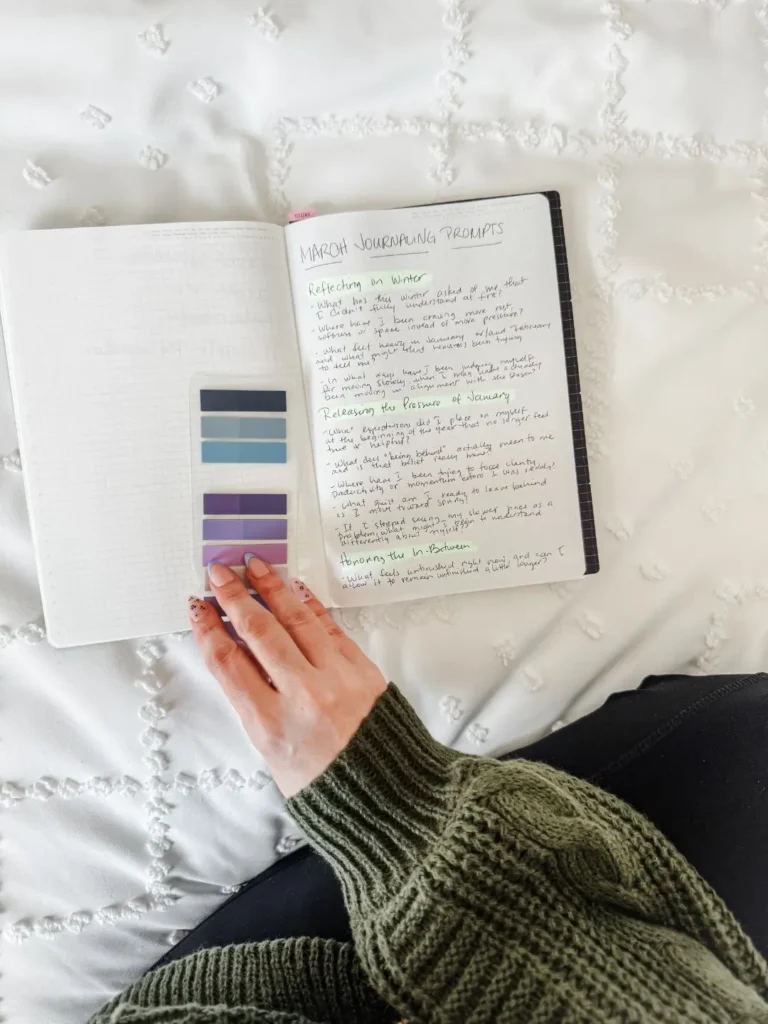
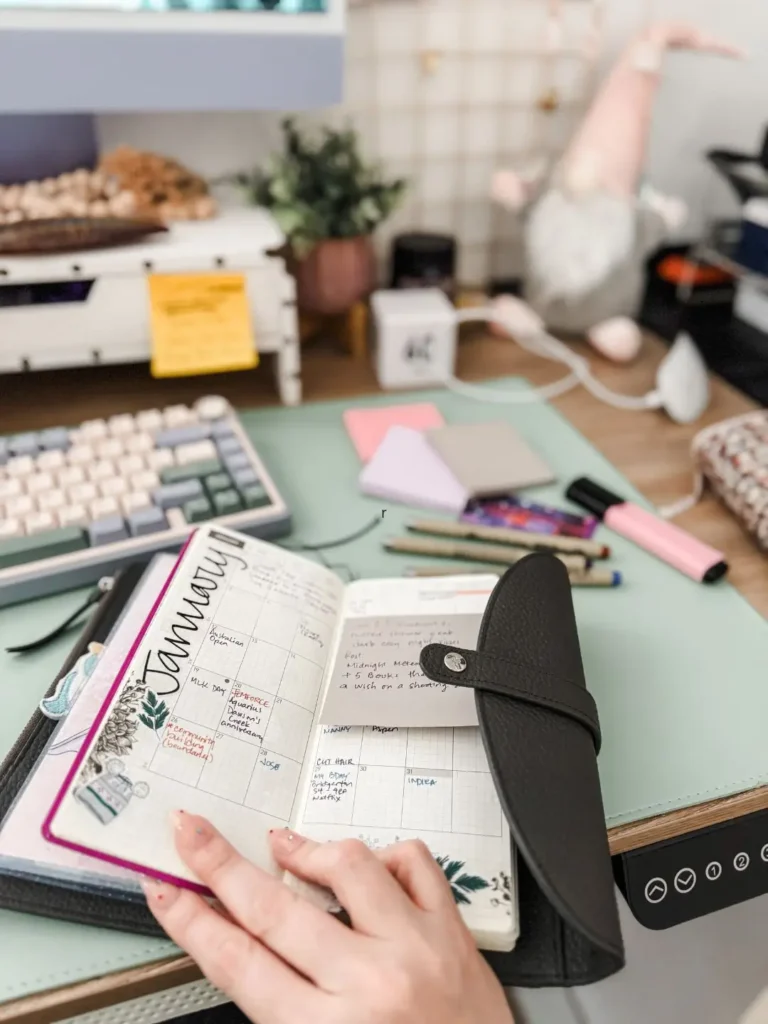
If the year feels like a blur, that’s normal. Most of us don’t remember our lives in neat chapters. We remember in flashes. The easiest way to do a yearly soft reset is to use what already exists as your memory map. Your planner, journal, camera roll, calendar, Apple Journal highlights… these are all receipts. You don’t need to reinvent the past; you just need to revisit it.
If you used a paper planner or journal, set aside a calm half hour and flip through month by month. Don’t overthink it. Notice what you circled, what you repeated, what you kept postponing, and what you celebrated. If you used Apple Journal (or Notes), open it and skim your highlights and entries. If you didn’t write much, even your camera roll can tell the story. Scroll by month and you’ll see what mattered, where you were, what you were drawn to, which days you documented, and which seasons you barely photographed at all.
As you review, you’re looking for patterns, not perfection. You’re trying to answer: what did this year actually ask of me?
A simple audit that feels like a conversation, not a critique
Once you’ve skimmed the year, the next part is almost surprisingly easy. You don’t need pages of reflection. A few honest paragraphs will do.
Think of it like pulling meaning out of the noise. Ask yourself: what did I do this year that I’m proud of, even if it wasn’t public? What drained me more than I expected? What gave me energy every single time? What did I keep saying I wanted, but didn’t make space for? What lesson did the year repeat until I finally paid attention?
If you’re someone who loves a tangible takeaway, write your answers as short, direct statements. Not “I should have…,” but “I noticed…” and “I learned…” The tone matters. This is your life, not an assignment.
Step 2: Declutter Your Space (A Key Part of a Yearly Soft Reset)
In step 1 we tackled mental clarity and in step 2, it’s the physical clarity. When I’m doing a yearly soft reset, there’s one thing I almost always do before the calendar flips: I declutter my space. Not in a “perfect Pinterest home” way, but more like a practical energy shift. I’ve learned that it’s hard to feel mentally clear when your environment is quietly asking you to manage it all day. Even when the stuff is tucked away in drawers and you don’t see it. And the best part? You don’t have to wait until the end of the year for this. You can do a declutter reset anytime you feel stuck, heavy, uninspired, or like you’re carrying too many half-finished versions of your life.
I like to spread it out over different days instead of trying to purge everything at once. One day might be clothes. Another day might be makeup. Then the pantry, my desk, the garage, the linen closet, whatever area has been quietly annoying me in the background. Doing it in small chunks makes it doable, and it keeps me from getting overwhelmed and quitting halfway through.
My general rule of thumb is simple: if I haven’t touched something in over a year, I pause and ask myself if I actually need to keep it. Of course there are exceptions: seasonal items, sentimental things, tools you don’t use often but genuinely need. Those can stay. But everything else? I’m pretty ruthless, because I’ve noticed that clutter creates stagnant energy. It’s like the past lingers in the corners of your house, and it’s hard for anything new to come in when everything is already filled to the brim.
Clothes are the easiest example. If something hasn’t fit me in over a year, I don’t keep it “just in case.” And if I know it’s not my style anymore. even if it’s technically fine, I let it go. I don’t want my closet to be a museum of who I used to be or who I thought I should be. I want it to reflect who I am now, and who I’m becoming. That’s part of making space for new energy, literally and emotionally. And yes, sometimes that has meant that my closet is pretty thin for a while. That’s ok.
Honestly, one of the most satisfying declutters for a yearly soft reset is the desk. I go through old papers, post-its, random notes, half-written blog plans, scattered outlines… everything that represents projects I didn’t finish or ideas I’ve already outgrown. My rule is: if it’s something I’m letting go of, I let it go fully. I don’t keep the paper trail of a project I’ve already mentally released. I trash it, recycle it, and move on. There’s something powerful about clearing not just physical clutter, but the mental clutter that comes from leaving loose ends visible.
If you want an easy way to start, choose one area and set a timer for 20 minutes. Don’t aim for perfect, aim for lighter. Your space doesn’t have to be minimal. Mine isn’t. It just has to feel like it supports you.
Step 3: Read Last Year’s Letter + Write Your New One
This is one of my favorite parts of a yearly soft reset because it builds self-trust in a way goals rarely do.
Every year I write a letter to my “future self” and now it’s the time to go find it. Read it slowly. It’s like meeting a past version of you in a doorway. You’ll see what you were hoping for, what you were afraid of, and what you didn’t know yet. And you’ll likely notice something else too: you made it through a full year. Even if it wasn’t the year you planned, you still lived it. You still adapted. You still became someone slightly different.
After reading that letter, write a new letter for your future self. Keep it simple and real. Tell your future self what you want her to remember when she’s stressed. Tell her what you hope she stopped carrying. Tell her what you want her to celebrate. Tell her what you want her to protect.
Save it somewhere you will actually revisit next year. The point isn’t to create a perfect document. The point is to create a thread of continuity between who you are now and who you’ll be later. That thread is grounding.
Step 4: Use the 5 Whys for what isn’t working
A yearly soft reset isn’t just reflection, it’s also a chance to make a change that actually sticks. And the fastest way to do that is to stop solving symptoms.
If there’s something that hasn’t been working (procrastination, inconsistency, overspending, burnout cycles, staying up too late, saying yes too often) try the “5 Whys” method. You take one issue and ask “why?” five times, answering honestly each time. The goal is not to spiral. The goal is to get to the root.
For example: “I procrastinate.” Why? Because starting feels overwhelming. Why? Because I think I need to do it perfectly. Why? Because I’m afraid it won’t be good enough. Why? Because I tie my worth to results. Why? Because approval has felt like safety.
When you get to the root, the solution changes. It’s no longer “be disciplined.” It becomes “make it safe to begin.” Maybe you need smaller steps. A timer. A messy first draft rule. A starting ritual. Accountability that feels supportive instead of pressuring. Root solutions feel gentler, and they work better.
A simple yearly soft reset plan you can do in one weekend
If you want this to feel gentle (and not like a weekend bootcamp), start with your space. I like doing this over a few nights because it builds momentum without stealing your whole day. Choose two or three evenings in a week, nothing dramatic, just a little consistency, and pick one zone at a time. Clothes one night, desk another, pantry another. Set a timer for 20-30 minutes, put on a playlist or an audiobook, and keep it simple: remove what’s stale, keep what supports your current life, and let go of what belongs to an older version of you.
By the time the week ends, you’ll be surprised how much lighter everything feels. Not because your house became perfect, but because you stopped carrying so many “maybe someday” items in your line of sight. And once your space is quieter, it becomes easier to hear yourself think. That’s when the reflection part lands better.
After those declutter nights, set aside one calm block of time (even 30-45 minutes) for your year audit. Grab your planner, journal, phone highlights, calendar, or even just your camera roll. Skim month by month and jot a few honest notes about what worked, what didn’t, what you’re proud of, what drained you, and what kept pulling at you all year. This isn’t about producing beautiful insights. It’s about noticing patterns you don’t want to repeat on autopilot.
Then do the most grounding step: read last year’s letter to yourself if you have one. If you don’t, that’s okay… start now. Write your letter to “end of next year you” in a way that feels like comfort, not pressure. Tell her what you hope she protected this year. Tell her what you want her to stop carrying. Tell her what you want her to remember when she forgets her own progress. Save it somewhere you’ll actually read next year. If you use your journal, you can simply write it in, and then tip in some cardstock paper to cover it. That way you don’t read it throughout the year, but it’s easily accessible.
Finally, choose one thing you want to change in the new year. one pattern you’re ready to understand, not just “fix.” Don’t go crazy here. I said one! Then use the 5 Whys and go gently. If your answer starts to feel tender, that’s usually a sign you’re close to the root. When you reach the real reason, pick one small action that supports that root. Not a massive plan, just one repeatable shift that makes the new behavior easier to choose.
A simple timeline you can copy
- Two-three nights this week (20-30 minutes each): declutter one zone per night
- One quiet session (30-45 minutes): audit the year using your planner/journal/highlights
- One cozy session (20 minutes): read last year’s letter + write the new one
- One focused session (15 minutes): 5 Whys + one small root-supporting action
This is the yearly soft reset: not fast, not harsh… just clear and doable.
The best part about this approach
The older I get, the more I believe that a fresh start doesn’t come from forcing yourself into a brand-new identity. It comes from creating space, physically and mentally, for the version of you that’s already trying to arrive. That’s why this kind of yearly soft reset works. It’s not about becoming perfect by January. It’s about closing loops, clearing what’s stale, and choosing what you actually want to carry into the next chapter.
If you do nothing else, declutter one small area and write one honest paragraph about what this year taught you. That alone shifts your energy. And if you want more than a fresh start, if you want real change, the gentle work is always the same: notice the pattern, understand the why, and make one small decision that your future self will thank you for.
Whenever you’re ready, a new season of your life can start softly. And softly is still powerful.
If you want more tips check out my slow living and intentional planning pages.